A car is a wheeled, self-powered motor vehicle used for transportation and a product of the automotive industry. Most definitions of the term specify that cars are designed to run primarily on roads, to have seating for one to eight people, to typically have four wheels with tyres, and to be constructed principally for the transport of people rather than goods.[2][3] The year 1886 is regarded as the birth year of the modern car. In that year, German inventor Karl Benz built the Benz Patent-Motorwagen. Cars did not become widely available until the early 20th century. One of the first cars that was accessible to the masses was the 1908 Model T, an American car manufactured by the Ford Motor Company. Cars were rapidly adopted in the United States of America, where they replaced animal-drawn carriages and carts, but took much longer to be accepted in Western Europe and other parts of the world.Cars are equipped with controls used for driving, parking, passenger comfort and safety, and controlling a variety of lights. Over the decades, additional features and controls have been added to vehicles, making them progressively more complex. Examples include rear reversing cameras, air conditioning, navigation systems, and in car entertainment. Most cars in use in the 2010s are propelled by an internal combustion engine, fueled by deflagration of gasoline (also known as petrol) or diesel. Both fuels cause air pollution and are also blamed for contributing to climate change and global warming.[4] Vehicles using alternative fuels such as ethanol flexible-fuel vehicles and natural gas vehicles are also gaining popularity in some countries. Electric cars, which were invented early in the history of the car, began to become commercially available in 2008.There are costs and benefits to car use. The costs of car usage include the cost of: acquiring the vehicle, interest payments (if the car is financed), repairs and auto maintenance, fuel, depreciation, driving time, parking fees, taxes, and insurance.[5] The costs to society of car use include: maintaining roads, land use, road congestion, air pollution, public health, health care, and disposing of the vehicle at the end of its life. Road traffic accidents are the largest cause of injury-related deaths worldwide.
Hyundai Santa Fe India Car Wallpapers 2011 : Automobiles
2012 Hyundai Santa Fe Specifications The Car Connection 2016 Car
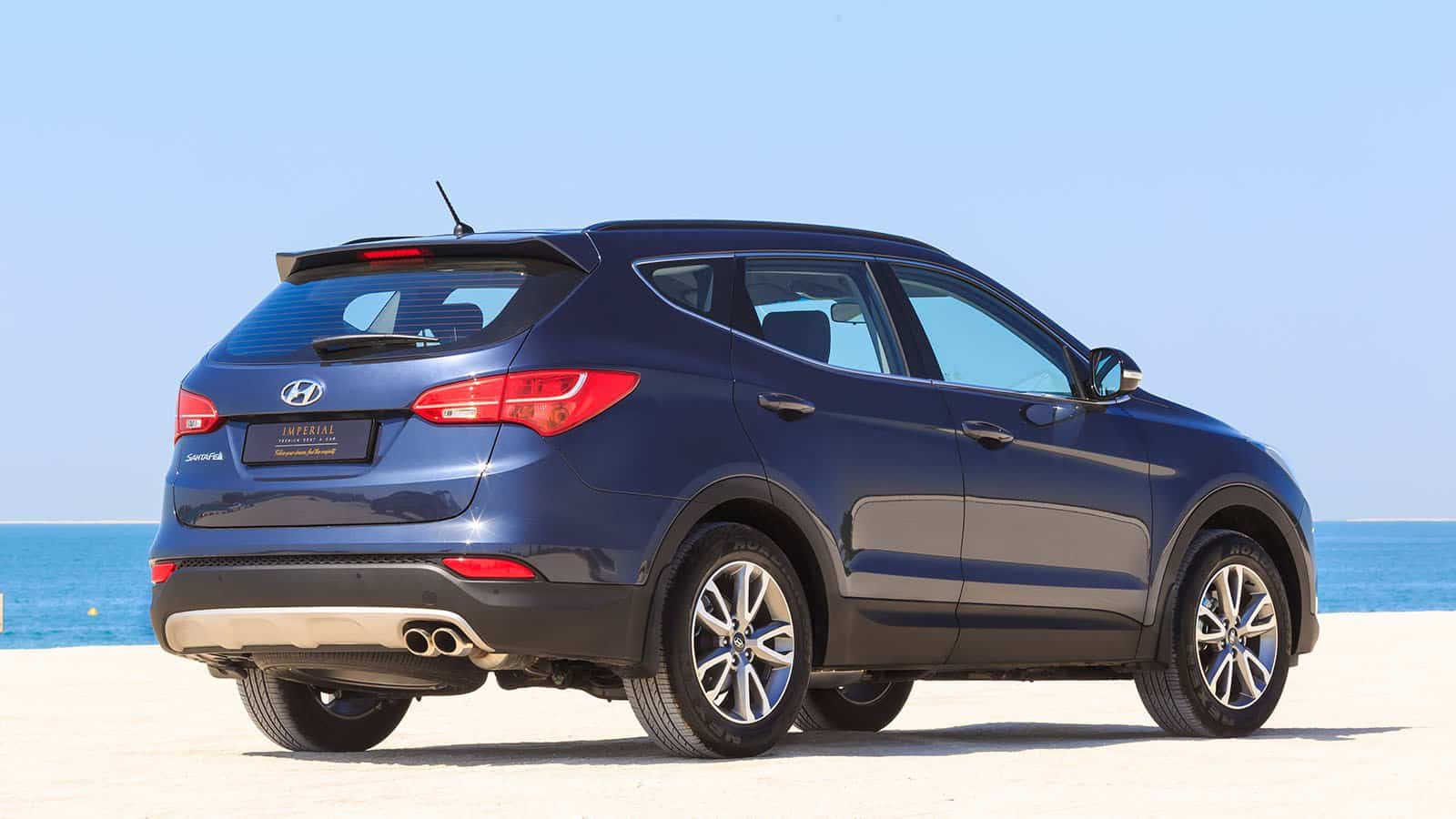
Hyundai Santa Fe Rent Dubai Imperial Premium Rent a Car
black color hyundai santa fe interior of hyundai santa fe
A car is a wheeled, self-powered motor vehicle used for transportation and a product of the automotive industry. Most definitions of the term specify that cars are designed to run primarily on roads, to have seating for one to eight people, to typically have four wheels with tyres, and to be constructed principally for the transport of people rather than goods.[2][3] The year 1886 is regarded as the birth year of the modern car. In that year, German inventor Karl Benz built the Benz Patent-Motorwagen. Cars did not become widely available until the early 20th century. One of the first cars that was accessible to the masses was the 1908 Model T, an American car manufactured by the Ford Motor Company. Cars were rapidly adopted in the United States of America, where they replaced animal-drawn carriages and carts, but took much longer to be accepted in Western Europe and other parts of the world.Cars are equipped with controls used for driving, parking, passenger comfort and safety, and controlling a variety of lights. Over the decades, additional features and controls have been added to vehicles, making them progressively more complex. Examples include rear reversing cameras, air conditioning, navigation systems, and in car entertainment. Most cars in use in the 2010s are propelled by an internal combustion engine, fueled by deflagration of gasoline (also known as petrol) or diesel. Both fuels cause air pollution and are also blamed for contributing to climate change and global warming.[4] Vehicles using alternative fuels such as ethanol flexible-fuel vehicles and natural gas vehicles are also gaining popularity in some countries. Electric cars, which were invented early in the history of the car, began to become commercially available in 2008.There are costs and benefits to car use. The costs of car usage include the cost of: acquiring the vehicle, interest payments (if the car is financed), repairs and auto maintenance, fuel, depreciation, driving time, parking fees, taxes, and insurance.[5] The costs to society of car use include: maintaining roads, land use, road congestion, air pollution, public health, health care, and disposing of the vehicle at the end of its life. Road traffic accidents are the largest cause of injury-related deaths worldwide.
A car is a wheeled, self-powered motor vehicle used for transportation and a product of the automotive industry. Most definitions of the term specify that cars are designed to run primarily on roads, to have seating for one to eight people, to typically have four wheels with tyres, and to be constructed principally for the transport of people rather than goods.[2][3] The year 1886 is regarded as the birth year of the modern car. In that year, German inventor Karl Benz built the Benz Patent-Motorwagen. Cars did not become widely available until the early 20th century. One of the first cars that was accessible to the masses was the 1908 Model T, an American car manufactured by the Ford Motor Company. Cars were rapidly adopted in the United States of America, where they replaced animal-drawn carriages and carts, but took much longer to be accepted in Western Europe and other parts of the world.Cars are equipped with controls used for driving, parking, passenger comfort and safety, and controlling a variety of lights. Over the decades, additional features and controls have been added to vehicles, making them progressively more complex. Examples include rear reversing cameras, air conditioning, navigation systems, and in car entertainment. Most cars in use in the 2010s are propelled by an internal combustion engine, fueled by deflagration of gasoline (also known as petrol) or diesel. Both fuels cause air pollution and are also blamed for contributing to climate change and global warming.[4] Vehicles using alternative fuels such as ethanol flexible-fuel vehicles and natural gas vehicles are also gaining popularity in some countries. Electric cars, which were invented early in the history of the car, began to become commercially available in 2008.There are costs and benefits to car use. The costs of car usage include the cost of: acquiring the vehicle, interest payments (if the car is financed), repairs and auto maintenance, fuel, depreciation, driving time, parking fees, taxes, and insurance.[5] The costs to society of car use include: maintaining roads, land use, road congestion, air pollution, public health, health care, and disposing of the vehicle at the end of its life. Road traffic accidents are the largest cause of injury-related deaths worldwide.
2017 Toyota Land Cruiser Prado Specs, Price 2017 / 2018 SUV and
Price Prado Jeep 2015 2017 2018 Best Cars Reviews
2018 Toyota Land Cruiser redesign, prado, 200, v8
2017 Toyota Land Prado Release Date All Cars Release
A car is a wheeled, self-powered motor vehicle used for transportation and a product of the automotive industry. Most definitions of the term specify that cars are designed to run primarily on roads, to have seating for one to eight people, to typically have four wheels with tyres, and to be constructed principally for the transport of people rather than goods.[2][3] The year 1886 is regarded as the birth year of the modern car. In that year, German inventor Karl Benz built the Benz Patent-Motorwagen. Cars did not become widely available until the early 20th century. One of the first cars that was accessible to the masses was the 1908 Model T, an American car manufactured by the Ford Motor Company. Cars were rapidly adopted in the United States of America, where they replaced animal-drawn carriages and carts, but took much longer to be accepted in Western Europe and other parts of the world.Cars are equipped with controls used for driving, parking, passenger comfort and safety, and controlling a variety of lights. Over the decades, additional features and controls have been added to vehicles, making them progressively more complex. Examples include rear reversing cameras, air conditioning, navigation systems, and in car entertainment. Most cars in use in the 2010s are propelled by an internal combustion engine, fueled by deflagration of gasoline (also known as petrol) or diesel. Both fuels cause air pollution and are also blamed for contributing to climate change and global warming.[4] Vehicles using alternative fuels such as ethanol flexible-fuel vehicles and natural gas vehicles are also gaining popularity in some countries. Electric cars, which were invented early in the history of the car, began to become commercially available in 2008.There are costs and benefits to car use. The costs of car usage include the cost of: acquiring the vehicle, interest payments (if the car is financed), repairs and auto maintenance, fuel, depreciation, driving time, parking fees, taxes, and insurance.[5] The costs to society of car use include: maintaining roads, land use, road congestion, air pollution, public health, health care, and disposing of the vehicle at the end of its life. Road traffic accidents are the largest cause of injury-related deaths worldwide.
2017 Honda Jazz Release Date Usa Auto Honda Rumors
2017 Honda Jazz Review Honda Cars and Motorcycles Models
Honda Jazz based crossover coming in 2017?honda01png.jpg
honda jazz hatchback practicality amp boot space carbuyer honda jazz
A car is a wheeled, self-powered motor vehicle used for transportation and a product of the automotive industry. Most definitions of the term specify that cars are designed to run primarily on roads, to have seating for one to eight people, to typically have four wheels with tyres, and to be constructed principally for the transport of people rather than goods.[2][3] The year 1886 is regarded as the birth year of the modern car. In that year, German inventor Karl Benz built the Benz Patent-Motorwagen. Cars did not become widely available until the early 20th century. One of the first cars that was accessible to the masses was the 1908 Model T, an American car manufactured by the Ford Motor Company. Cars were rapidly adopted in the United States of America, where they replaced animal-drawn carriages and carts, but took much longer to be accepted in Western Europe and other parts of the world.Cars are equipped with controls used for driving, parking, passenger comfort and safety, and controlling a variety of lights. Over the decades, additional features and controls have been added to vehicles, making them progressively more complex. Examples include rear reversing cameras, air conditioning, navigation systems, and in car entertainment. Most cars in use in the 2010s are propelled by an internal combustion engine, fueled by deflagration of gasoline (also known as petrol) or diesel. Both fuels cause air pollution and are also blamed for contributing to climate change and global warming.[4] Vehicles using alternative fuels such as ethanol flexible-fuel vehicles and natural gas vehicles are also gaining popularity in some countries. Electric cars, which were invented early in the history of the car, began to become commercially available in 2008.There are costs and benefits to car use. The costs of car usage include the cost of: acquiring the vehicle, interest payments (if the car is financed), repairs and auto maintenance, fuel, depreciation, driving time, parking fees, taxes, and insurance.[5] The costs to society of car use include: maintaining roads, land use, road congestion, air pollution, public health, health care, and disposing of the vehicle at the end of its life. Road traffic accidents are the largest cause of injury-related deaths worldwide.
2017 Buick Enclave Release Date and Price USA Cars News
The 2017 Buick Enclave has a starting MSRP of less than $40,000
2017 Buick Enclave Leather AWD Saukville WI 15930642
A car is a wheeled, self-powered motor vehicle used for transportation and a product of the automotive industry. Most definitions of the term specify that cars are designed to run primarily on roads, to have seating for one to eight people, to typically have four wheels with tyres, and to be constructed principally for the transport of people rather than goods.[2][3] The year 1886 is regarded as the birth year of the modern car. In that year, German inventor Karl Benz built the Benz Patent-Motorwagen. Cars did not become widely available until the early 20th century. One of the first cars that was accessible to the masses was the 1908 Model T, an American car manufactured by the Ford Motor Company. Cars were rapidly adopted in the United States of America, where they replaced animal-drawn carriages and carts, but took much longer to be accepted in Western Europe and other parts of the world.Cars are equipped with controls used for driving, parking, passenger comfort and safety, and controlling a variety of lights. Over the decades, additional features and controls have been added to vehicles, making them progressively more complex. Examples include rear reversing cameras, air conditioning, navigation systems, and in car entertainment. Most cars in use in the 2010s are propelled by an internal combustion engine, fueled by deflagration of gasoline (also known as petrol) or diesel. Both fuels cause air pollution and are also blamed for contributing to climate change and global warming.[4] Vehicles using alternative fuels such as ethanol flexible-fuel vehicles and natural gas vehicles are also gaining popularity in some countries. Electric cars, which were invented early in the history of the car, began to become commercially available in 2008.There are costs and benefits to car use. The costs of car usage include the cost of: acquiring the vehicle, interest payments (if the car is financed), repairs and auto maintenance, fuel, depreciation, driving time, parking fees, taxes, and insurance.[5] The costs to society of car use include: maintaining roads, land use, road congestion, air pollution, public health, health care, and disposing of the vehicle at the end of its life. Road traffic accidents are the largest cause of injury-related deaths worldwide.
2017 MASERATI GT SPORT Coupe for sale in Plainview, NY at Maserati of
2017 Maserati GranTurismo Sport Coupe
Imports New Vehicles 2017 Maserati GranTurismo Convertible Sport
2017 Maserati Granturismo Sport MSRP Price, MPG, Interior 2018 NEW
A car is a wheeled, self-powered motor vehicle used for transportation and a product of the automotive industry. Most definitions of the term specify that cars are designed to run primarily on roads, to have seating for one to eight people, to typically have four wheels with tyres, and to be constructed principally for the transport of people rather than goods.[2][3] The year 1886 is regarded as the birth year of the modern car. In that year, German inventor Karl Benz built the Benz Patent-Motorwagen. Cars did not become widely available until the early 20th century. One of the first cars that was accessible to the masses was the 1908 Model T, an American car manufactured by the Ford Motor Company. Cars were rapidly adopted in the United States of America, where they replaced animal-drawn carriages and carts, but took much longer to be accepted in Western Europe and other parts of the world.Cars are equipped with controls used for driving, parking, passenger comfort and safety, and controlling a variety of lights. Over the decades, additional features and controls have been added to vehicles, making them progressively more complex. Examples include rear reversing cameras, air conditioning, navigation systems, and in car entertainment. Most cars in use in the 2010s are propelled by an internal combustion engine, fueled by deflagration of gasoline (also known as petrol) or diesel. Both fuels cause air pollution and are also blamed for contributing to climate change and global warming.[4] Vehicles using alternative fuels such as ethanol flexible-fuel vehicles and natural gas vehicles are also gaining popularity in some countries. Electric cars, which were invented early in the history of the car, began to become commercially available in 2008.There are costs and benefits to car use. The costs of car usage include the cost of: acquiring the vehicle, interest payments (if the car is financed), repairs and auto maintenance, fuel, depreciation, driving time, parking fees, taxes, and insurance.[5] The costs to society of car use include: maintaining roads, land use, road congestion, air pollution, public health, health care, and disposing of the vehicle at the end of its life. Road traffic accidents are the largest cause of injury-related deaths worldwide.
2017 Audi Q7 Consumer Guide Auto
Pros and Cons Review: 2017 Audi Q7 redesign is a resounding success
New Audi Q7 2017 First Look And Interior Changes Review Theautoweek
A car is a wheeled, self-powered motor vehicle used for transportation and a product of the automotive industry. Most definitions of the term specify that cars are designed to run primarily on roads, to have seating for one to eight people, to typically have four wheels with tyres, and to be constructed principally for the transport of people rather than goods.[2][3] The year 1886 is regarded as the birth year of the modern car. In that year, German inventor Karl Benz built the Benz Patent-Motorwagen. Cars did not become widely available until the early 20th century. One of the first cars that was accessible to the masses was the 1908 Model T, an American car manufactured by the Ford Motor Company. Cars were rapidly adopted in the United States of America, where they replaced animal-drawn carriages and carts, but took much longer to be accepted in Western Europe and other parts of the world.Cars are equipped with controls used for driving, parking, passenger comfort and safety, and controlling a variety of lights. Over the decades, additional features and controls have been added to vehicles, making them progressively more complex. Examples include rear reversing cameras, air conditioning, navigation systems, and in car entertainment. Most cars in use in the 2010s are propelled by an internal combustion engine, fueled by deflagration of gasoline (also known as petrol) or diesel. Both fuels cause air pollution and are also blamed for contributing to climate change and global warming.[4] Vehicles using alternative fuels such as ethanol flexible-fuel vehicles and natural gas vehicles are also gaining popularity in some countries. Electric cars, which were invented early in the history of the car, began to become commercially available in 2008.There are costs and benefits to car use. The costs of car usage include the cost of: acquiring the vehicle, interest payments (if the car is financed), repairs and auto maintenance, fuel, depreciation, driving time, parking fees, taxes, and insurance.[5] The costs to society of car use include: maintaining roads, land use, road congestion, air pollution, public health, health care, and disposing of the vehicle at the end of its life. Road traffic accidents are the largest cause of injury-related deaths worldwide.
Chevrolet Equinox Premier vs. Ford Escape Titanium
2017 Chevrolet Equinox Redesign Reviews Of New Cars
2017 chevrolet equinox spy photos 13 2017 chevrolet equinox spy photos
2017 Chevrolet Equinox Premier For Sale :: AutaBuy.com
A car is a wheeled, self-powered motor vehicle used for transportation and a product of the automotive industry. Most definitions of the term specify that cars are designed to run primarily on roads, to have seating for one to eight people, to typically have four wheels with tyres, and to be constructed principally for the transport of people rather than goods.[2][3] The year 1886 is regarded as the birth year of the modern car. In that year, German inventor Karl Benz built the Benz Patent-Motorwagen. Cars did not become widely available until the early 20th century. One of the first cars that was accessible to the masses was the 1908 Model T, an American car manufactured by the Ford Motor Company. Cars were rapidly adopted in the United States of America, where they replaced animal-drawn carriages and carts, but took much longer to be accepted in Western Europe and other parts of the world.Cars are equipped with controls used for driving, parking, passenger comfort and safety, and controlling a variety of lights. Over the decades, additional features and controls have been added to vehicles, making them progressively more complex. Examples include rear reversing cameras, air conditioning, navigation systems, and in car entertainment. Most cars in use in the 2010s are propelled by an internal combustion engine, fueled by deflagration of gasoline (also known as petrol) or diesel. Both fuels cause air pollution and are also blamed for contributing to climate change and global warming.[4] Vehicles using alternative fuels such as ethanol flexible-fuel vehicles and natural gas vehicles are also gaining popularity in some countries. Electric cars, which were invented early in the history of the car, began to become commercially available in 2008.There are costs and benefits to car use. The costs of car usage include the cost of: acquiring the vehicle, interest payments (if the car is financed), repairs and auto maintenance, fuel, depreciation, driving time, parking fees, taxes, and insurance.[5] The costs to society of car use include: maintaining roads, land use, road congestion, air pollution, public health, health care, and disposing of the vehicle at the end of its life. Road traffic accidents are the largest cause of injury-related deaths worldwide.
New 2015 / 2017 Audi Q7 For Sale CarGurus
Audi Meadowlands Introduces the AllNew 2017 Audi Q7 SUV Benzel
The allnew 2017 Audi Q7 gt; Audi Canada
Image: 2017 Audi Q7, size: 1024 x 768, type: gif, posted on: February
A car is a wheeled, self-powered motor vehicle used for transportation and a product of the automotive industry. Most definitions of the term specify that cars are designed to run primarily on roads, to have seating for one to eight people, to typically have four wheels with tyres, and to be constructed principally for the transport of people rather than goods.[2][3] The year 1886 is regarded as the birth year of the modern car. In that year, German inventor Karl Benz built the Benz Patent-Motorwagen. Cars did not become widely available until the early 20th century. One of the first cars that was accessible to the masses was the 1908 Model T, an American car manufactured by the Ford Motor Company. Cars were rapidly adopted in the United States of America, where they replaced animal-drawn carriages and carts, but took much longer to be accepted in Western Europe and other parts of the world.Cars are equipped with controls used for driving, parking, passenger comfort and safety, and controlling a variety of lights. Over the decades, additional features and controls have been added to vehicles, making them progressively more complex. Examples include rear reversing cameras, air conditioning, navigation systems, and in car entertainment. Most cars in use in the 2010s are propelled by an internal combustion engine, fueled by deflagration of gasoline (also known as petrol) or diesel. Both fuels cause air pollution and are also blamed for contributing to climate change and global warming.[4] Vehicles using alternative fuels such as ethanol flexible-fuel vehicles and natural gas vehicles are also gaining popularity in some countries. Electric cars, which were invented early in the history of the car, began to become commercially available in 2008.There are costs and benefits to car use. The costs of car usage include the cost of: acquiring the vehicle, interest payments (if the car is financed), repairs and auto maintenance, fuel, depreciation, driving time, parking fees, taxes, and insurance.[5] The costs to society of car use include: maintaining roads, land use, road congestion, air pollution, public health, health care, and disposing of the vehicle at the end of its life. Road traffic accidents are the largest cause of injury-related deaths worldwide.
 A car is a wheeled, self-powered motor vehicle used for transportation and a product of the automotive industry. Most definitions of the term specify that cars are designed to run primarily on roads, to have seating for one to eight people, to typically have four wheels with tyres, and to be constructed principally for the transport of people rather than goods.[2][3] The year 1886 is regarded as the birth year of the modern car. In that year, German inventor Karl Benz built the Benz Patent-Motorwagen. Cars did not become widely available until the early 20th century. One of the first cars that was accessible to the masses was the 1908 Model T, an American car manufactured by the Ford Motor Company. Cars were rapidly adopted in the United States of America, where they replaced animal-drawn carriages and carts, but took much longer to be accepted in Western Europe and other parts of the world.Cars are equipped with controls used for driving, parking, passenger comfort and safety, and controlling a variety of lights. Over the decades, additional features and controls have been added to vehicles, making them progressively more complex. Examples include rear reversing cameras, air conditioning, navigation systems, and in car entertainment. Most cars in use in the 2010s are propelled by an internal combustion engine, fueled by deflagration of gasoline (also known as petrol) or diesel. Both fuels cause air pollution and are also blamed for contributing to climate change and global warming.[4] Vehicles using alternative fuels such as ethanol flexible-fuel vehicles and natural gas vehicles are also gaining popularity in some countries. Electric cars, which were invented early in the history of the car, began to become commercially available in 2008.There are costs and benefits to car use. The costs of car usage include the cost of: acquiring the vehicle, interest payments (if the car is financed), repairs and auto maintenance, fuel, depreciation, driving time, parking fees, taxes, and insurance.[5] The costs to society of car use include: maintaining roads, land use, road congestion, air pollution, public health, health care, and disposing of the vehicle at the end of its life. Road traffic accidents are the largest cause of injury-related deaths worldwide.

.jpg "black color hyundai santa fe interior of hyundai santa fe")

 A car is a wheeled, self-powered motor vehicle used for transportation and a product of the automotive industry. Most definitions of the term specify that cars are designed to run primarily on roads, to have seating for one to eight people, to typically have four wheels with tyres, and to be constructed principally for the transport of people rather than goods.[2][3] The year 1886 is regarded as the birth year of the modern car. In that year, German inventor Karl Benz built the Benz Patent-Motorwagen. Cars did not become widely available until the early 20th century. One of the first cars that was accessible to the masses was the 1908 Model T, an American car manufactured by the Ford Motor Company. Cars were rapidly adopted in the United States of America, where they replaced animal-drawn carriages and carts, but took much longer to be accepted in Western Europe and other parts of the world.Cars are equipped with controls used for driving, parking, passenger comfort and safety, and controlling a variety of lights. Over the decades, additional features and controls have been added to vehicles, making them progressively more complex. Examples include rear reversing cameras, air conditioning, navigation systems, and in car entertainment. Most cars in use in the 2010s are propelled by an internal combustion engine, fueled by deflagration of gasoline (also known as petrol) or diesel. Both fuels cause air pollution and are also blamed for contributing to climate change and global warming.[4] Vehicles using alternative fuels such as ethanol flexible-fuel vehicles and natural gas vehicles are also gaining popularity in some countries. Electric cars, which were invented early in the history of the car, began to become commercially available in 2008.There are costs and benefits to car use. The costs of car usage include the cost of: acquiring the vehicle, interest payments (if the car is financed), repairs and auto maintenance, fuel, depreciation, driving time, parking fees, taxes, and insurance.[5] The costs to society of car use include: maintaining roads, land use, road congestion, air pollution, public health, health care, and disposing of the vehicle at the end of its life. Road traffic accidents are the largest cause of injury-related deaths worldwide.


 A car is a wheeled, self-powered motor vehicle used for transportation and a product of the automotive industry. Most definitions of the term specify that cars are designed to run primarily on roads, to have seating for one to eight people, to typically have four wheels with tyres, and to be constructed principally for the transport of people rather than goods.[2][3] The year 1886 is regarded as the birth year of the modern car. In that year, German inventor Karl Benz built the Benz Patent-Motorwagen. Cars did not become widely available until the early 20th century. One of the first cars that was accessible to the masses was the 1908 Model T, an American car manufactured by the Ford Motor Company. Cars were rapidly adopted in the United States of America, where they replaced animal-drawn carriages and carts, but took much longer to be accepted in Western Europe and other parts of the world.Cars are equipped with controls used for driving, parking, passenger comfort and safety, and controlling a variety of lights. Over the decades, additional features and controls have been added to vehicles, making them progressively more complex. Examples include rear reversing cameras, air conditioning, navigation systems, and in car entertainment. Most cars in use in the 2010s are propelled by an internal combustion engine, fueled by deflagration of gasoline (also known as petrol) or diesel. Both fuels cause air pollution and are also blamed for contributing to climate change and global warming.[4] Vehicles using alternative fuels such as ethanol flexible-fuel vehicles and natural gas vehicles are also gaining popularity in some countries. Electric cars, which were invented early in the history of the car, began to become commercially available in 2008.There are costs and benefits to car use. The costs of car usage include the cost of: acquiring the vehicle, interest payments (if the car is financed), repairs and auto maintenance, fuel, depreciation, driving time, parking fees, taxes, and insurance.[5] The costs to society of car use include: maintaining roads, land use, road congestion, air pollution, public health, health care, and disposing of the vehicle at the end of its life. Road traffic accidents are the largest cause of injury-related deaths worldwide.


 A car is a wheeled, self-powered motor vehicle used for transportation and a product of the automotive industry. Most definitions of the term specify that cars are designed to run primarily on roads, to have seating for one to eight people, to typically have four wheels with tyres, and to be constructed principally for the transport of people rather than goods.[2][3] The year 1886 is regarded as the birth year of the modern car. In that year, German inventor Karl Benz built the Benz Patent-Motorwagen. Cars did not become widely available until the early 20th century. One of the first cars that was accessible to the masses was the 1908 Model T, an American car manufactured by the Ford Motor Company. Cars were rapidly adopted in the United States of America, where they replaced animal-drawn carriages and carts, but took much longer to be accepted in Western Europe and other parts of the world.Cars are equipped with controls used for driving, parking, passenger comfort and safety, and controlling a variety of lights. Over the decades, additional features and controls have been added to vehicles, making them progressively more complex. Examples include rear reversing cameras, air conditioning, navigation systems, and in car entertainment. Most cars in use in the 2010s are propelled by an internal combustion engine, fueled by deflagration of gasoline (also known as petrol) or diesel. Both fuels cause air pollution and are also blamed for contributing to climate change and global warming.[4] Vehicles using alternative fuels such as ethanol flexible-fuel vehicles and natural gas vehicles are also gaining popularity in some countries. Electric cars, which were invented early in the history of the car, began to become commercially available in 2008.There are costs and benefits to car use. The costs of car usage include the cost of: acquiring the vehicle, interest payments (if the car is financed), repairs and auto maintenance, fuel, depreciation, driving time, parking fees, taxes, and insurance.[5] The costs to society of car use include: maintaining roads, land use, road congestion, air pollution, public health, health care, and disposing of the vehicle at the end of its life. Road traffic accidents are the largest cause of injury-related deaths worldwide.


 A car is a wheeled, self-powered motor vehicle used for transportation and a product of the automotive industry. Most definitions of the term specify that cars are designed to run primarily on roads, to have seating for one to eight people, to typically have four wheels with tyres, and to be constructed principally for the transport of people rather than goods.[2][3] The year 1886 is regarded as the birth year of the modern car. In that year, German inventor Karl Benz built the Benz Patent-Motorwagen. Cars did not become widely available until the early 20th century. One of the first cars that was accessible to the masses was the 1908 Model T, an American car manufactured by the Ford Motor Company. Cars were rapidly adopted in the United States of America, where they replaced animal-drawn carriages and carts, but took much longer to be accepted in Western Europe and other parts of the world.Cars are equipped with controls used for driving, parking, passenger comfort and safety, and controlling a variety of lights. Over the decades, additional features and controls have been added to vehicles, making them progressively more complex. Examples include rear reversing cameras, air conditioning, navigation systems, and in car entertainment. Most cars in use in the 2010s are propelled by an internal combustion engine, fueled by deflagration of gasoline (also known as petrol) or diesel. Both fuels cause air pollution and are also blamed for contributing to climate change and global warming.[4] Vehicles using alternative fuels such as ethanol flexible-fuel vehicles and natural gas vehicles are also gaining popularity in some countries. Electric cars, which were invented early in the history of the car, began to become commercially available in 2008.There are costs and benefits to car use. The costs of car usage include the cost of: acquiring the vehicle, interest payments (if the car is financed), repairs and auto maintenance, fuel, depreciation, driving time, parking fees, taxes, and insurance.[5] The costs to society of car use include: maintaining roads, land use, road congestion, air pollution, public health, health care, and disposing of the vehicle at the end of its life. Road traffic accidents are the largest cause of injury-related deaths worldwide.


 A car is a wheeled, self-powered motor vehicle used for transportation and a product of the automotive industry. Most definitions of the term specify that cars are designed to run primarily on roads, to have seating for one to eight people, to typically have four wheels with tyres, and to be constructed principally for the transport of people rather than goods.[2][3] The year 1886 is regarded as the birth year of the modern car. In that year, German inventor Karl Benz built the Benz Patent-Motorwagen. Cars did not become widely available until the early 20th century. One of the first cars that was accessible to the masses was the 1908 Model T, an American car manufactured by the Ford Motor Company. Cars were rapidly adopted in the United States of America, where they replaced animal-drawn carriages and carts, but took much longer to be accepted in Western Europe and other parts of the world.Cars are equipped with controls used for driving, parking, passenger comfort and safety, and controlling a variety of lights. Over the decades, additional features and controls have been added to vehicles, making them progressively more complex. Examples include rear reversing cameras, air conditioning, navigation systems, and in car entertainment. Most cars in use in the 2010s are propelled by an internal combustion engine, fueled by deflagration of gasoline (also known as petrol) or diesel. Both fuels cause air pollution and are also blamed for contributing to climate change and global warming.[4] Vehicles using alternative fuels such as ethanol flexible-fuel vehicles and natural gas vehicles are also gaining popularity in some countries. Electric cars, which were invented early in the history of the car, began to become commercially available in 2008.There are costs and benefits to car use. The costs of car usage include the cost of: acquiring the vehicle, interest payments (if the car is financed), repairs and auto maintenance, fuel, depreciation, driving time, parking fees, taxes, and insurance.[5] The costs to society of car use include: maintaining roads, land use, road congestion, air pollution, public health, health care, and disposing of the vehicle at the end of its life. Road traffic accidents are the largest cause of injury-related deaths worldwide.


 A car is a wheeled, self-powered motor vehicle used for transportation and a product of the automotive industry. Most definitions of the term specify that cars are designed to run primarily on roads, to have seating for one to eight people, to typically have four wheels with tyres, and to be constructed principally for the transport of people rather than goods.[2][3] The year 1886 is regarded as the birth year of the modern car. In that year, German inventor Karl Benz built the Benz Patent-Motorwagen. Cars did not become widely available until the early 20th century. One of the first cars that was accessible to the masses was the 1908 Model T, an American car manufactured by the Ford Motor Company. Cars were rapidly adopted in the United States of America, where they replaced animal-drawn carriages and carts, but took much longer to be accepted in Western Europe and other parts of the world.Cars are equipped with controls used for driving, parking, passenger comfort and safety, and controlling a variety of lights. Over the decades, additional features and controls have been added to vehicles, making them progressively more complex. Examples include rear reversing cameras, air conditioning, navigation systems, and in car entertainment. Most cars in use in the 2010s are propelled by an internal combustion engine, fueled by deflagration of gasoline (also known as petrol) or diesel. Both fuels cause air pollution and are also blamed for contributing to climate change and global warming.[4] Vehicles using alternative fuels such as ethanol flexible-fuel vehicles and natural gas vehicles are also gaining popularity in some countries. Electric cars, which were invented early in the history of the car, began to become commercially available in 2008.There are costs and benefits to car use. The costs of car usage include the cost of: acquiring the vehicle, interest payments (if the car is financed), repairs and auto maintenance, fuel, depreciation, driving time, parking fees, taxes, and insurance.[5] The costs to society of car use include: maintaining roads, land use, road congestion, air pollution, public health, health care, and disposing of the vehicle at the end of its life. Road traffic accidents are the largest cause of injury-related deaths worldwide.


 A car is a wheeled, self-powered motor vehicle used for transportation and a product of the automotive industry. Most definitions of the term specify that cars are designed to run primarily on roads, to have seating for one to eight people, to typically have four wheels with tyres, and to be constructed principally for the transport of people rather than goods.[2][3] The year 1886 is regarded as the birth year of the modern car. In that year, German inventor Karl Benz built the Benz Patent-Motorwagen. Cars did not become widely available until the early 20th century. One of the first cars that was accessible to the masses was the 1908 Model T, an American car manufactured by the Ford Motor Company. Cars were rapidly adopted in the United States of America, where they replaced animal-drawn carriages and carts, but took much longer to be accepted in Western Europe and other parts of the world.Cars are equipped with controls used for driving, parking, passenger comfort and safety, and controlling a variety of lights. Over the decades, additional features and controls have been added to vehicles, making them progressively more complex. Examples include rear reversing cameras, air conditioning, navigation systems, and in car entertainment. Most cars in use in the 2010s are propelled by an internal combustion engine, fueled by deflagration of gasoline (also known as petrol) or diesel. Both fuels cause air pollution and are also blamed for contributing to climate change and global warming.[4] Vehicles using alternative fuels such as ethanol flexible-fuel vehicles and natural gas vehicles are also gaining popularity in some countries. Electric cars, which were invented early in the history of the car, began to become commercially available in 2008.There are costs and benefits to car use. The costs of car usage include the cost of: acquiring the vehicle, interest payments (if the car is financed), repairs and auto maintenance, fuel, depreciation, driving time, parking fees, taxes, and insurance.[5] The costs to society of car use include: maintaining roads, land use, road congestion, air pollution, public health, health care, and disposing of the vehicle at the end of its life. Road traffic accidents are the largest cause of injury-related deaths worldwide.


 A car is a wheeled, self-powered motor vehicle used for transportation and a product of the automotive industry. Most definitions of the term specify that cars are designed to run primarily on roads, to have seating for one to eight people, to typically have four wheels with tyres, and to be constructed principally for the transport of people rather than goods.[2][3] The year 1886 is regarded as the birth year of the modern car. In that year, German inventor Karl Benz built the Benz Patent-Motorwagen. Cars did not become widely available until the early 20th century. One of the first cars that was accessible to the masses was the 1908 Model T, an American car manufactured by the Ford Motor Company. Cars were rapidly adopted in the United States of America, where they replaced animal-drawn carriages and carts, but took much longer to be accepted in Western Europe and other parts of the world.Cars are equipped with controls used for driving, parking, passenger comfort and safety, and controlling a variety of lights. Over the decades, additional features and controls have been added to vehicles, making them progressively more complex. Examples include rear reversing cameras, air conditioning, navigation systems, and in car entertainment. Most cars in use in the 2010s are propelled by an internal combustion engine, fueled by deflagration of gasoline (also known as petrol) or diesel. Both fuels cause air pollution and are also blamed for contributing to climate change and global warming.[4] Vehicles using alternative fuels such as ethanol flexible-fuel vehicles and natural gas vehicles are also gaining popularity in some countries. Electric cars, which were invented early in the history of the car, began to become commercially available in 2008.There are costs and benefits to car use. The costs of car usage include the cost of: acquiring the vehicle, interest payments (if the car is financed), repairs and auto maintenance, fuel, depreciation, driving time, parking fees, taxes, and insurance.[5] The costs to society of car use include: maintaining roads, land use, road congestion, air pollution, public health, health care, and disposing of the vehicle at the end of its life. Road traffic accidents are the largest cause of injury-related deaths worldwide.


 A car is a wheeled, self-powered motor vehicle used for transportation and a product of the automotive industry. Most definitions of the term specify that cars are designed to run primarily on roads, to have seating for one to eight people, to typically have four wheels with tyres, and to be constructed principally for the transport of people rather than goods.[2][3] The year 1886 is regarded as the birth year of the modern car. In that year, German inventor Karl Benz built the Benz Patent-Motorwagen. Cars did not become widely available until the early 20th century. One of the first cars that was accessible to the masses was the 1908 Model T, an American car manufactured by the Ford Motor Company. Cars were rapidly adopted in the United States of America, where they replaced animal-drawn carriages and carts, but took much longer to be accepted in Western Europe and other parts of the world.Cars are equipped with controls used for driving, parking, passenger comfort and safety, and controlling a variety of lights. Over the decades, additional features and controls have been added to vehicles, making them progressively more complex. Examples include rear reversing cameras, air conditioning, navigation systems, and in car entertainment. Most cars in use in the 2010s are propelled by an internal combustion engine, fueled by deflagration of gasoline (also known as petrol) or diesel. Both fuels cause air pollution and are also blamed for contributing to climate change and global warming.[4] Vehicles using alternative fuels such as ethanol flexible-fuel vehicles and natural gas vehicles are also gaining popularity in some countries. Electric cars, which were invented early in the history of the car, began to become commercially available in 2008.There are costs and benefits to car use. The costs of car usage include the cost of: acquiring the vehicle, interest payments (if the car is financed), repairs and auto maintenance, fuel, depreciation, driving time, parking fees, taxes, and insurance.[5] The costs to society of car use include: maintaining roads, land use, road congestion, air pollution, public health, health care, and disposing of the vehicle at the end of its life. Road traffic accidents are the largest cause of injury-related deaths worldwide.


